

Luxembourg Drone Center
Innovation at the heart of drone training
The Luxembourg Drone Center aspires to offer comprehensive and innovative training relating to drones (UAS), perfectly suited to the needs of the Luxembourg economy.
Training to meet market needs
The CNFPC is thus seizing the opportunity to support growth in this rapidly-expanding sector, by offering continuing training geared to the needs of businesses and administrations.
The training courses at the Luxembourg Drone Center are arranged around three main pathways:
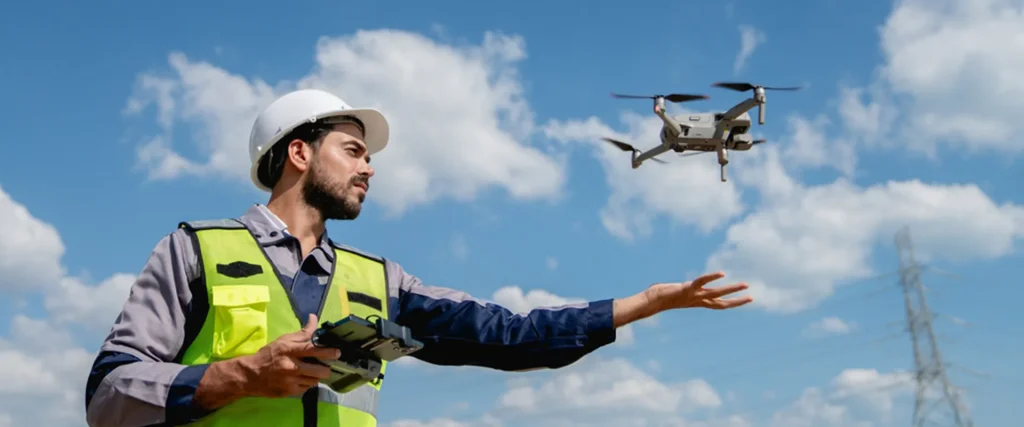
Training courses for drone operators and pilots
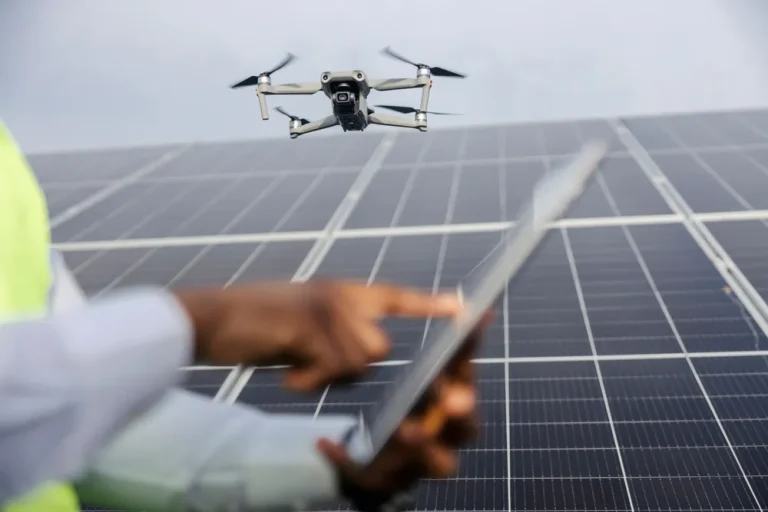
Training in professional drone applications

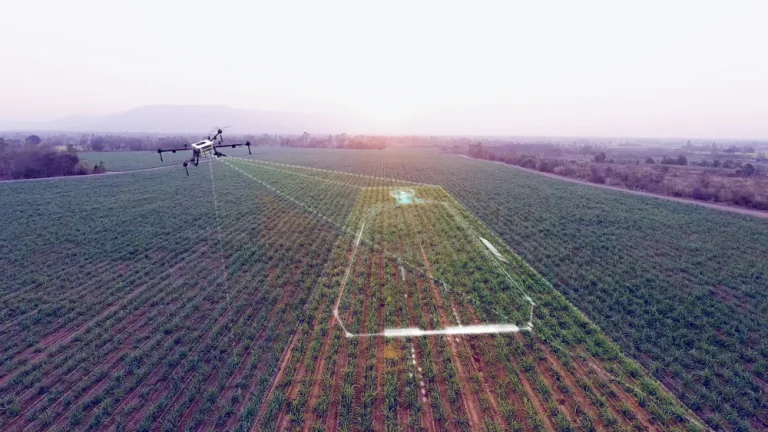
Training in data management and analysis
→ Discover our training courses in our catalogue
Why the CNFPC ?
We are the reference drone training centre in Luxembourg
With unique infrastructures, designed to bring together practice, innovation and safety, in a professional environment.
EASA/DAC-compliant, recognised training
Courses that are certified and updated in line with the latest European requirements, to ensure full compliance for your operations.
Exceptional network of partners
A synergy between public, industrial and scientific actors, making the centre a true hub of drone innovation in Luxembourg.
Cutting-edge technology, at your fingertips
A comprehensive fleet and latest-generation sensors (RGB, iDAR, heat sensors, multispectral sensors, photogrammetry, etc.) for every mission, from inspecting infrastructures to search and rescue.
Flexible, forward-looking programmes
Modules that evolve and are customisable, intended to address the real-world needs of administrations, businesses and sector professionals.
FAQ
What is the open category for drone operations?
- The open category groups drone operations constituting a low risk, requiring neither prior authorisation nor a specific declaration of operation to the civil aviation authority, on condition that the restrictions set out in the European regulations are respected.
- It applies mainly to visual line of sight (VLOS) flights, up to a maximum height of 120 metres, and under conditions where the pilot can maintain direct control of the drone at all times.
- The open category is divided into three sub-categories (A1, A2, A3), which define the conditions for use depending on the weight of the drone, the technical characteristics (CE class), and proximity to people.
- To operate in the open category, the pilot must hold the necessary certifications (A1/A3 and possibly A2), register as a UAS operator if required, and ensure that the drone and its flying environment respect the legal conditions in force.
- To obtain A1/A3 or A2 certificates and to register yourself as a UAS operator, please consult the Direction de l’aviation civile (Directorate of Civil Aviation) website.
How do I obtain the A1/A3 remote drone pilot certificate?
- To obtain an A1/A3 remote drone pilot certificate, you need to take an online training course and pass an online test, organised by the Directorate of Civil Aviation. Please use the link to register.
- After having obtained your A1/A3 certificate, you can take practical training for remote drone pilots at the CNFPC.
- This training enables you to develop the practical skills to pilot a drone confidently and while respecting the regulations.
- Please refer to our training catalogue to register for one of the practical training sessions for remote drone pilots in the open category.
How do I obtain the A2 remote drone pilot certificate?
- To obtain an A2 remote drone pilot certificate, you need to take an online training course and pass a test, organised by the Directorate of Civil Aviation, in person. Please use the link to register.
- After having obtained your A2 certificate, you can take practical training for remote drone pilots at the CNFPC.
- This training enables you to develop the practical skills to pilot a drone confidently and while respecting the regulations. It also enables you to comply with the European regulations, which require a drone pilot to have both theoretical and practical skills to operate an A2 category drone.
- Please refer to our training catalogue to register for one of the practical training sessions for remote drone pilots in the open category.
What is the specific category for drone operations?
- The specific category concerns drone operations presenting a higher degree of risk than those in the open category, such as when flights are conducted beyond visual line of sight (BVLOS), in proximity to third persons, or in complex environments (densely-populated urban areas, critical infrastructures, etc.).
- To operate in the specific category, it is mandatory to undertake a specific operations risk assessment (SORA) or use a European standard scenario (STS) where it exists.
- The operator should then submit a declaration (in the case of an STS, e.g. STS-01 or STS-02) or request an operational authorisation from the Directorate of Civil Aviation for missions not covered by a standard scenario.The specific category therefore generally requires:
- a specific operations risk assessment (SORA),
- mitigation and safety measures,
- additional theoretical and practical skills,
- an operations manual defined by the operator.
- This category is used by businesses, public bodies, the emergency services, industrial operators and professional service providers who undertake missions which are complex, repeated, or in regulated settings.
How do I become a specific category drone pilot?
- To become a specific category drone pilot, you can obtain the remote drone pilot certificate for standard scenarios (STS) by passing an in-person exam organised by the Directorate of Civil Aviation. Please use the link to register.
- The CNFPC is currently developing a training course to prepare for the STS exam. This will be available from 2026.
- The CNFPC will also offer practical training for remote drone pilots in the open category